Beijing Drone Ownership Ban Takes Effect Over Security Concerns
11/17/2026 / By Douglas Harrington
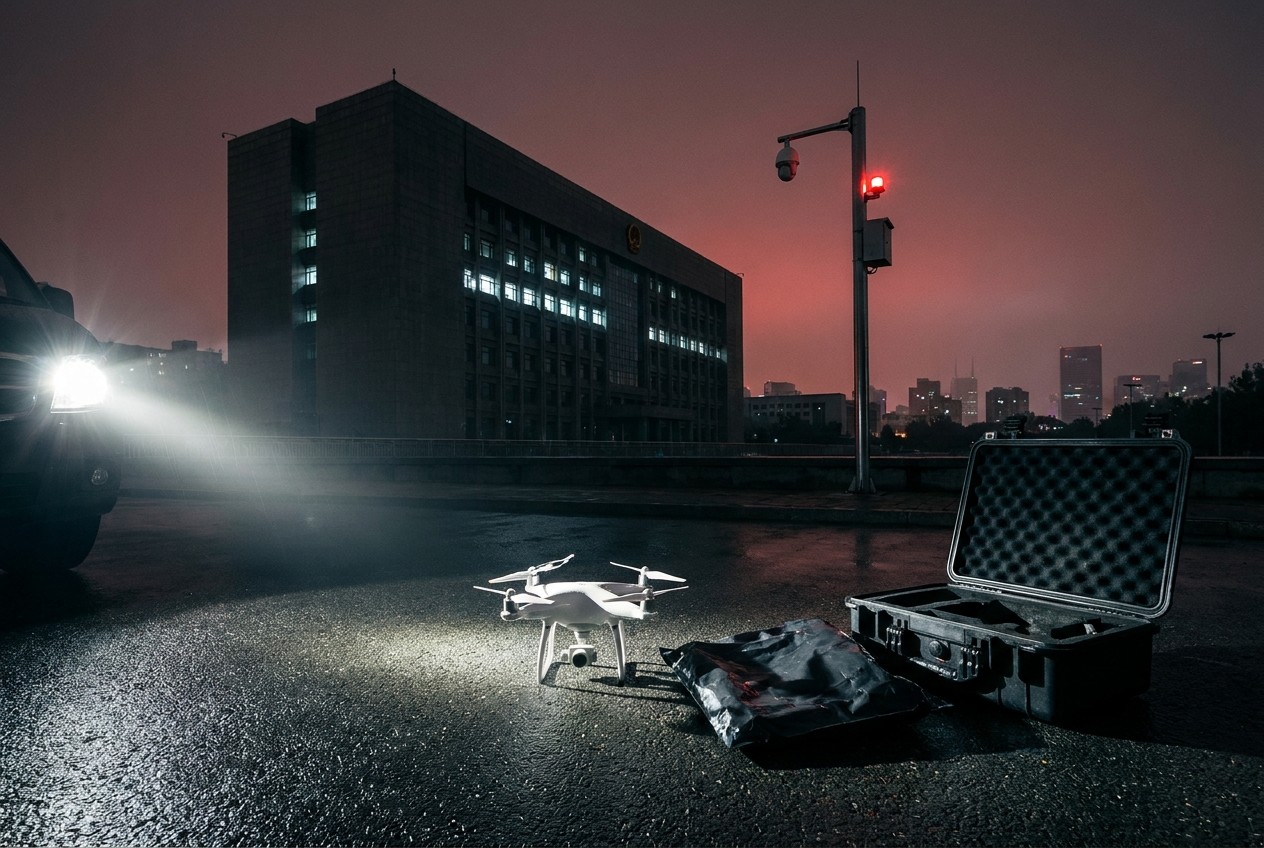
Beijing has begun enforcing a sweeping ban on private drone ownership, prohibiting residents from possessing, storing, transporting, or selling drones anywhere in the Chinese capital. Framed as an airspace safety measure, the regulation marks a significant expansion of state control over the city’s skies, requiring owners to dispose of their devices and reserving drone use largely for authorized government, commercial, and emergency purposes.
Transporting drones or their components into the city is also forbidden under the revised regulation [1].
The revocation of personal ownership marks a sharp escalation in the Chinese Communist Party’s control over its capital, a city that hosts the central government, top leaders, and the headquarters of the ruling party. While the stated justification is airspace safety, the measure effectively removes private eyes from the sky above the political center of the world’s second-largest economy.
Ban Follows September Announcement and May Sales Restrictions
The prohibition was initially announced in September by the Standing Committee of the Beijing Municipal People’s Congress, which revised the city’s regulation on unmanned aerial vehicles on Sept. 11, according to the Library of Congress [1]. The new rules expanded a previous prohibition that took effect earlier in the year.
The revised regulation specifically states that unauthorized possession, storage, transportation, and sale of drones across the city are now banned [1].
Penalties for violating the ban include a fine and the confiscation of equipment. The tightening of regulations has raised questions about the future of the commercial drone industry in the city, though officials indicated the ban applies specifically to individual consumer ownership and is not intended to halt commercial operations [2].
Owners Disposed of Devices Before Enforcement Date
Ahead of the Sunday implementation, owners were required to get rid of their devices. These options were presented as the final opportunity for residents to comply with the new legal framework before enforcement began.
The enforcement mechanism relies on local police and administrative authorities to conduct searches and seizures, leveraging the city’s extensive surveillance network to identify non-compliant devices. The disposal requirements underscore the logistical challenge of removing thousands of consumer devices from a sprawling metropolis.
Officials Cite Airspace Safety After June Crash
Authorities cited airspace safety fears after a small plane crashed into Beijing’s tallest skyscraper in June. The crash killed the pilot and injured 13 others, according to reports released by Turkiye Today and CNA [3][4].
The event prompted a heavy police presence in the capital’s major business district [5]. Chinese media heavily suppressed the incident, with information regarding the identity of the pilot and the cause of the accident remaining unknown five days later, highlighting the opacity of the regime’s crisis communication [6].
Beijing’s status as the political heart of China necessitates stringent security measures. The presence of unauthorized aircraft, whether manned or unmanned, is viewed by officials as a direct threat to the stability and secrecy of the state apparatus.
Exemptions Allow Some Drone Flights; Popularity Remains
Despite the general ban, exemptions for drone flights may be granted for specific reasons such as counterterrorism, law enforcement, emergency relief, agriculture, or scientific research [3][7]. These exceptions indicate that the technology itself is not prohibited, but rather its private, unmonitored use is deemed the risk.
The proliferation of the technology had previously supported a “low-altitude economy” that Beijing had listed as a strategic priority, expected to generate significant revenue by 2035 [8]. However, the security apparatus has evidently determined that the risks of private ownership outweigh the economic benefits in the capital region.
Authorities said the ban will help ensure the security of China’s capital [9]. The centralization of airspace control aligns with a broader global trend of governments asserting sovereignty over low-altitude airspace. The report did not include immediate comment from drone owners or independent analysts regarding the long-term impact on the hobbyist market.
References
- China: Beijing Municipality Regulation Bans the Operation and Possession of Drones. https://www.loc.gov/item/global-legal-monitor/2026-11-02/china-beijing-municipality-regulation-bans-the-operation-and-possession-of-drones
- Beijing Bans Drone Possession Citywide, Sets November Confiscation Deadline. https://www.techtimes.com/articles/327480/20260914/beijing-bans-drone-possession-citywide-sets-november-confiscation-deadline.htm
- Beijing enforces citywide drone ownership ban over security concerns. https://www.turkiyetoday.com/world/beijing-enforces-citywide-drone-ownership-ban-over-security-concerns-3232428
- Beijing to ban drone possession, citing security. https://www.channelnewsasia.com/east-asia/beijing-ban-drone-possession-security-6382801
- Small Aircraft Crashes Into Tallest Building in Beijing. https://theepochtimes.com/china/small-aircraft-crashes-into-tallest-building-in-beijing-6053774
- Beijing High-Rise Plane Crash Muffled by Strict Media Blackout. https://www.ntd.com/beijing-high-rise-plane-crash-muffled-by-strict-media-blackout_1156313.html
- Not even at home: Beijing bans drone ownership across the whole capital. https://www.malaymail.com/news/world/2026/11/15/not-even-at-home-beijing-bans-drone-ownership-across-the-whole-capital/243359
- China to ban drone sales in Beijing citing security concerns. https://bbc.com/news/articles/c4gv4dvngygo
- Beijing bans drone ownership to safeguard capital’s security. https://www.manilatimes.net/2026/11/16/world/asia-oceania/beijing-bans-drone-ownership-to-safeguard-capitals-security/2470304
Explainer Infographic


Submit a correction >>
Tagged Under:
airspace security, banned, Beijing, big government, China, Chinese Communist Party, civil liberties, Dangerous, drone ban, drones, low-altitude economy, national security, surveillance, UAV, unmanned aerial vehicles
This article may contain statements that reflect the opinion of the author
RECENT NEWS & ARTICLES